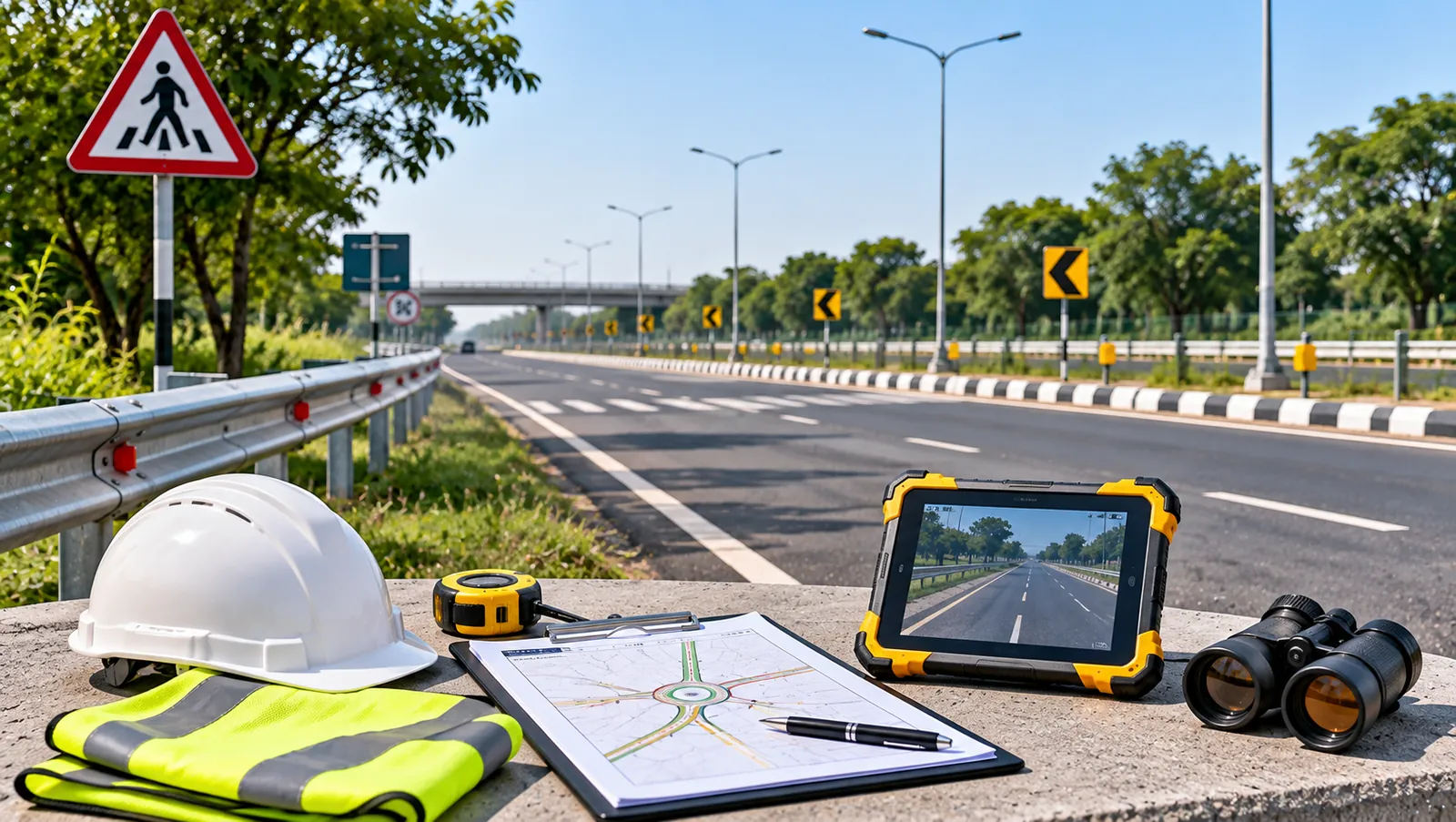
India loses over 1.5 lakh lives to road accidents every year — the highest in the world. The painful truth is, most of these deaths are preventable. Road Safety Audits (RSAs) systematically identify the engineering failures that turn ordinary roads into killers. Done right, an RSA isn't just a report — it's a roadmap to saving lives.
WHAT IS A ROAD SAFETY AUDIT?
A Road Safety Audit (RSA) is a formal, systematic examination of a road or road project by qualified safety auditors. The goal: identify potential safety problems before they cause accidents. Unlike accident investigation (reactive), RSA is proactive — preventing accidents from happening in the first place.
The methodology follows IRC SP:88-2010 (Indian Roads Congress guidelines), which mandates audits at specific project stages.
FIVE STAGES WHERE RSA IS MANDATORY
NHAI now requires RSAs for all national highway projects. Many state PWDs (including PWD Rajasthan) have similar mandates. The earlier you catch a safety issue, the cheaper it is to fix — changing alignment at Stage 1 costs nothing; changing alignment after construction costs crores.
HOW WE CONDUCT AN RSA
A thorough RSA isn't a single drive-through. It's a structured engineering exercise:
ON THE GROUND
During our 19.2 km audit of SH-37C in Phulera, we identified 12 critical safety issues including missing chevrons on curves, inadequate sight distance at 4 intersections, and unprotected drop-offs near embankments — all corrected before fatal incidents occurred.
MOST COMMON SAFETY DEFICIENCIES WE FIND
THE BUSINESS CASE FOR RSA
Beyond the moral imperative of saving lives, RSAs make economic sense:
RSAs aren't optional anymore.
With India ranked #1 globally in road deaths and increasing scrutiny on highway safety, Road Safety Audits are now a standard requirement — and a small investment that pays back many times over in lives saved and accidents prevented.